Rips and currents at Cox Bay
March 31st, 2026
Cox Bay is known for sometimes having strong rips and currents. Especially on big south swell days, when all the water gets pushed into the south corner, and then it hugs the rocks all the way out of the bay. Last year, a few surfers were carried into the rocks by a strong current, and then they were stuck in the rip, not knowing how to get out. They climbed on the rocks and waited for the Coast Guard to help them get back to the beach over the rocks. Luckily, no one was hurt. They left the longboards behind as they had to climb back over rocks at night. Our team went back there a few days later to collect the surfboards.
What are rips and currents?
A current is a movement of water in one direction, like a river. We have a longshore current and a rip current. A longshore current is pushing water from one side of the beach to the other, so surfers have to continuously paddle to stay in the right spot.
A rip is a strong current of water that finds a deep channel and rushes back from the shore to the ocean. To get out of a rip is important to remain calm and swim perpendicular to the current to get out.
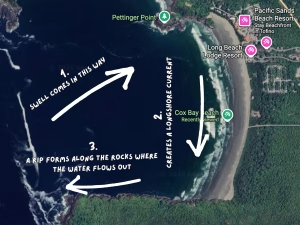
This is just an example; it is not the case every day. Rips can form anywhere on the beach, depending on the current sandbar and tide. They are always strongest around rocks and headlands and during low tide. The longshore current can flow the opposite way as well. It is important to observe and be aware of what the ocean is doing.
How to spot a rip?
- Look at the waves for a pattern to see where they aren’t breaking regularly
- The water looks choppier, messier, and darker.
- There’s usually foam, sand, seaweed, or other debris floating in the rip going away from the beach.
- Maybe you’re surfing or swimming and suddenly notice yourself being pulled in one direction, like you’re in a river
Now, how can you escape from a rip current?
- First and most important, stay calm! Panicking will just burn your energy.
- Never swim against the current; you will get exhausted.
- Hold on to your surfboard because it will help you stay afloat and save energy.
- The rip will always be taking you towards the open ocean. So to get out, swim parallel to the beach until you’re out of the current.
- It might be a long paddle, so control your breathing and make your strokes count. Try not to stop until you’re out.

Read more on https://coastsmart.ca/
If it’s your first time surfing, it might be a good idea to take a surf lesson, where you’ll learn all about hazards and how to protect yourself in the ocean. Book your lesson here.
Have fun and take time to spot rips before going in the water!
Lara 🏄♀️
Here’s a video of the surfboard rescue mission after the group left them behind at Cox Bay. ⤵️