10 Surf Safety Tips for Surfing in Tofino
October 25th, 2026
Tofino is one of the safest places to learn how to surf. It’s a remote fishing and surf town tucked away on the West Coast of Vancouver Island. There are lots of surf spots to choose from, the beaches are sandy, and even on the busiest summer days, the crowds are nothing compared to those at popular surf destinations around the world.
However, surfing is not inherently a safe sport. There are a few things to keep in mind to protect yourself and others in the Pacific Ocean. These basic safety tips cover things every surfer should check when visiting a new surf location, including water temperature, the ocean floor, wildlife, crowds, and swell conditions.
1. Cold Water
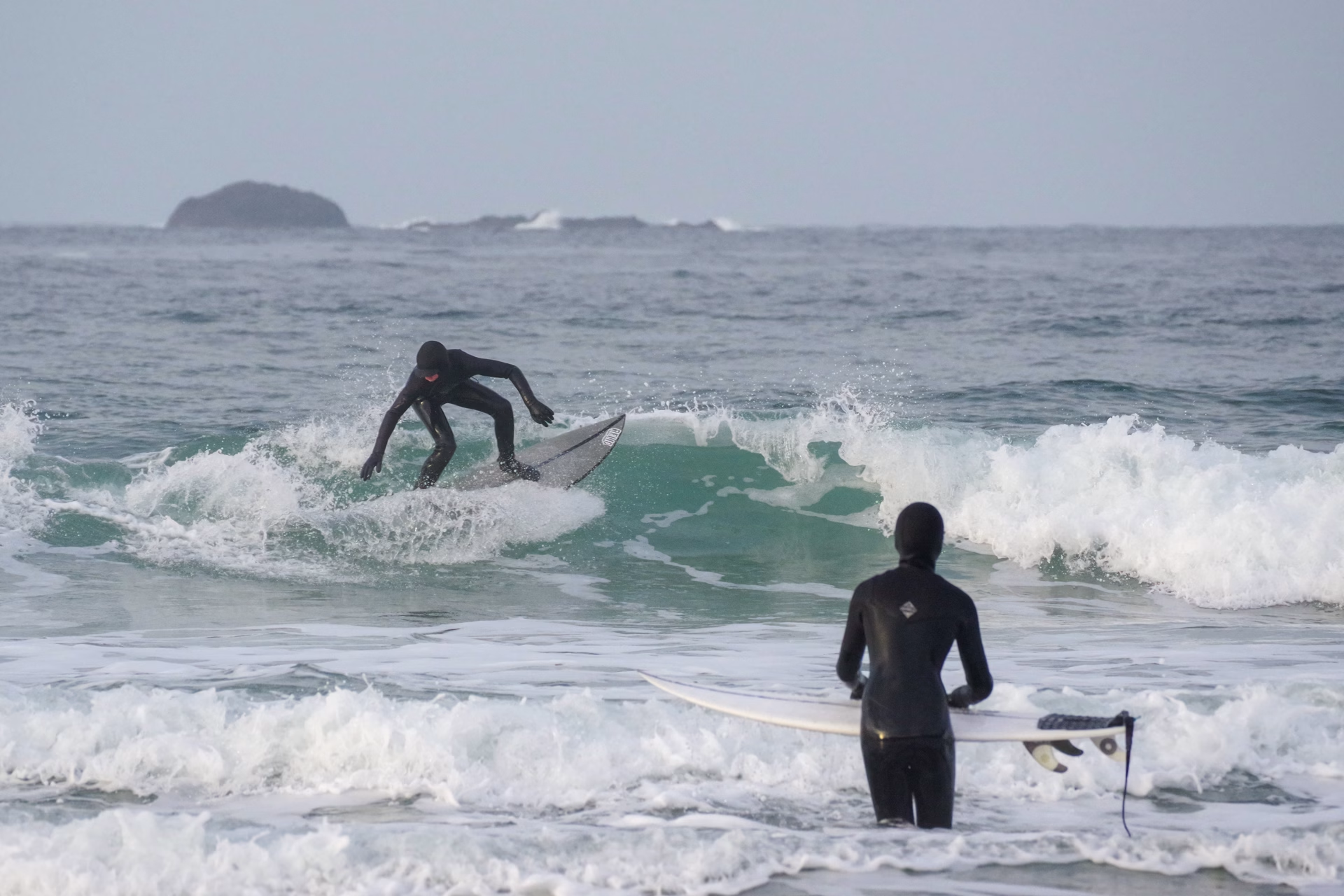
Let’s start with the proper gear. If you’re planning a surf trip to Tofino, you’ll need a wetsuit no matter what time of year you visit. Prolonged exposure to cold water can cause hypothermia, and the water temperature in Tofino reaches 17°C (63°F) on only a few days of the year. Here are our recommendations:
- Summer: 4/3 mm hoodless wetsuit
- Spring and fall: 4/3 mm or 5/4 mm hooded wetsuit; accessories are optional
- Winter: 5/4 mm hooded wetsuit, gloves, and boots
At Swell Tofino surf shop, you can rent 4/5mm Xcel wetsuits year-round.
2. Rocks and Reefs
Luckily, all of Tofino’s beaches have sandy bottoms. However, there are a few rocky areas you should know about, as they’re easier to spot at low tide.
- North Chesterman Beach: There are a few rocks in front of the entrance from the main parking lot. Be careful in this area at high tide, as some of the rocks may be submerged.
- South Chesterman Beach: There are a few larger rocks on the left side of the beach, towards Rosie Bay. They’re never completely submerged, but you can see them more clearly at low tide.
3. Wildlife
There’s lots of wildlife in Tofino. You might occasionally spot seals or sea lions in the surf zone, and sometimes even whale spouts or orca fins in the distance. These animals generally keep their distance, so there’s no need to worry. Give them space and enjoy the view!
4. Rips and Currents
There are two types of currents you should know about:
- Longshore currents move parallel to the beach. You might find yourself drifting along the shoreline, so it’s a good idea to choose a landmark on the beach to help you keep track of your position.
- Rip currents carry water away from the beach, often through the surf zone and beyond the breaking waves. If you find yourself caught in a rip current, stay calm and avoid trying to paddle directly against it. If possible, paddle parallel to the beach to get out of the strongest current. Most importantly, stay on your surfboard and keep paddling steadily.
5. Big Waves
Most people visit Tofino in the summer, when the waves tend to be smaller. However, if you’re visiting during any other season, be prepared for bigger waves. Long-period swells and storm swells can produce powerful waves.
It helps to spend about 10–15 minutes on the sand before getting into the water. Take a moment to stretch and observe the ocean conditions.
Sometimes, heading to a different beach with smaller waves is a better choice for your skill level. That’s one of the best things about surfing in Tofino: there’s usually another beach with smaller waves that are better suited to beginners.
6. Surfboards
Knowing how to handle a surfboard is important. If it’s your first time surfing, it’s best to take a surf lesson or, at the very least, watch an instructional video.
You’ll learn how to carry your surfboard properly, manoeuvre it in the water, and perform the pop-up technique.
How to protect yourself from your surfboard
- One of the most common surfing injuries occurs when a surfer is hit on the head by a surfboard rail or fin. To help prevent this, always cover your head with your arms when falling off your surfboard. We call this an arm helmet.
- Avoid holding onto your leash. It can wrap around your hand or even break a finger. Instead, hold your surfboard with both hands whenever it’s safe to do so. This gives you more control over your board.
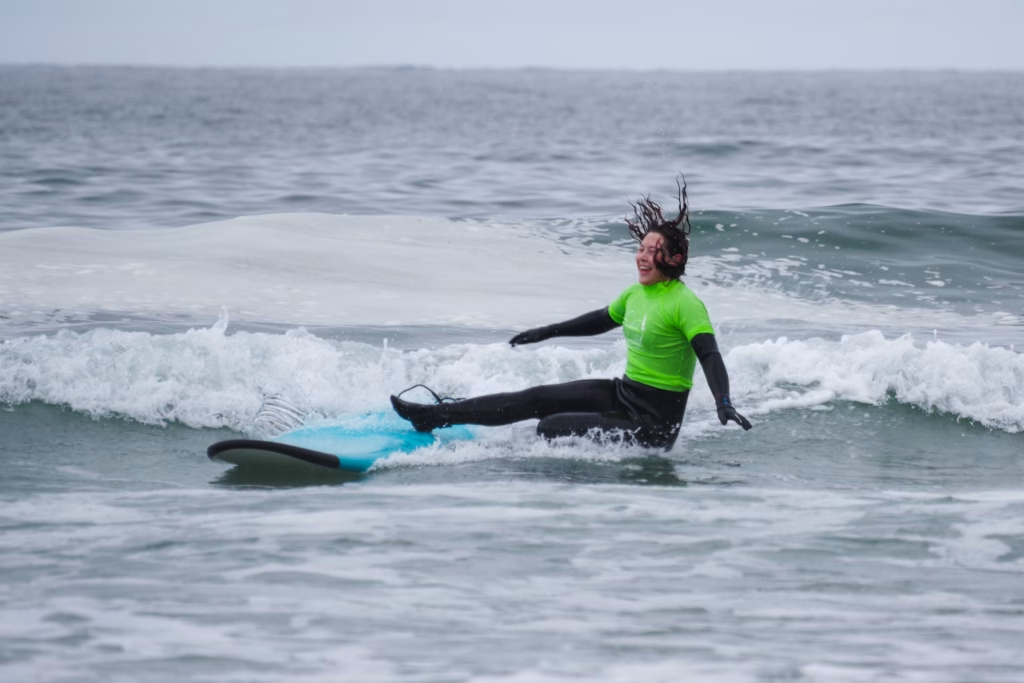
- Another common and potentially avoidable injury is a twisted ankle. To help prevent this, fall backwards off your surfboard, spreading your arms and legs like a starfish. Avoid jumping feet-first, and never dive headfirst. The water may be too shallow for you to do so safely.
7. Other Surfers
While Tofino isn’t usually overly crowded, there are definitely days when it feels like everyone is going for the same wave. Even if you’re a beginner who’s still catching whitewater, it’s important to understand surf etiquette to keep yourself and others safe.
➡️ The surfer closest to the peak or already riding the wave has priority. Don’t drop in on them; wait for the next wave. If you accidentally get in their way, own your mistake and apologise. It happens!
➡️ Always maintain control of your surfboard. Learn the proper techniques for getting over waves, and avoid ditching your board. A loose surfboard can injure other surfers.
➡️ Paddle wide, not straight through the impact zone. This can be tricky at a beach break like those in Tofino, where there isn’t always a clear path out. Look for gaps between the peaks and avoid paddling through areas where waves are breaking most powerfully. Always keep an eye out for other surfers, and avoid paddling directly into the path of someone riding a wave.
8. Sun
Tofino gets plenty of sunshine in the summer. When you’re surfing, the ocean reflects UV radiation, increasing your overall exposure to the sun. This additional exposure, combined with direct sunlight, can lead to severe sunburn.
Luckily for us in Tofino, we’re usually wearing wetsuits, which protect most of our skin. Apply water-resistant sunscreen to any exposed areas, especially your face, hands, and feet, and you’re good to go!
9. Tides
Tidal exchanges in Tofino can reach up to 4 m (13 ft), affecting wave quality and creating strong currents. Around peak high tides and after storms, watch out for floating driftwood in the surf zone.
10. Wind
In surfing, we look for offshore winds, which blow from the land towards the ocean. They help hold up the waves, allowing them to break more smoothly and cleanly.
At Tofino’s beaches, winds from the east are generally favourable. We often get southeasterly winds in the morning, creating glassy conditions around sunrise.
When surfing Long Beach in Pacific Rim National Park Reserve, look for northwesterly or northeasterly winds.
When is it too windy?
It depends on the wind direction.
Onshore winds blow from the ocean towards the land. When they exceed 10–15 knots, they can flatten the waves and create choppy conditions.
Offshore winds can reach up to 25 knots before paddling, controlling your board, and catching waves become too difficult. However, conditions vary depending on the swell, the beach, and your experience level.
These surf safety tips cover the basics of surfing in Tofino. It’s always best to ask a local about the conditions and characteristics of different surf spots in the area.
If you have more questions about Tofino’s surf breaks, give us a call or drop by our shop. We’re happy to help!
Happy surfing!
Lara 🤙
Check this one next: This is how you can score good surf in Tofino!